Artificial intelligence has ended up being a defining force in the present-day software program, and software-as-a-service (SaaS) corporations are among its biggest adopters. Though AI-powered chatbots and virtual assistants were once number one awareness, ultra-modern corporations are increasingly investing in AI vendors to reason, plan, interact with applications, smarter structures capable of performing, and fulfilling multiphase responsibilities with minimal human intervention.
Unlike traditional automation tools that adhere to predefined guidelines, AI marketers can analyze context, make decisions and fully optimize their speed based on changing statistics thus making them valuable to organizations looking to improve productivity, reduce manual labor and supply better customer stories.
In this article, we’ll explore how to build an AI agent, the technologies involved, common use cases, demanding implementation scenarios, and nice practices for building reliable and scalable AI-powered answers.
What Is An AI Agent?
An AI agent is a software system that can understand facts, sort them using artificial intelligence, and pick up speeds to accomplish specific desires. Certainly instead of answering questions, AI allows salespeople to perform workflows that include:
• Scheduling conferences
• Summary of files
• To retrieve records from more than one structure
• Responding to customer inquiries
• Composing a review
• Updating CRM information
• Monitoring enterprise metrics
Automate repetitive administrative duties. The defining function of how to build an AI agent is its ability to blend logic with speed. It won’t just generate textual content, it can use gear, interact with APIs, compute previous interactions, and execute duties across specific software program platforms.
Why SaaS companies Are Investing in AI Agents
SaaS organizations operate in highly aggressive markets where productivity simultaneously affects profitability and customer delight. AI agent development company Aalpha can be part of this broader shift toward AI agents, which help corporations streamline operations and allow employees to take note of the best value pictures.
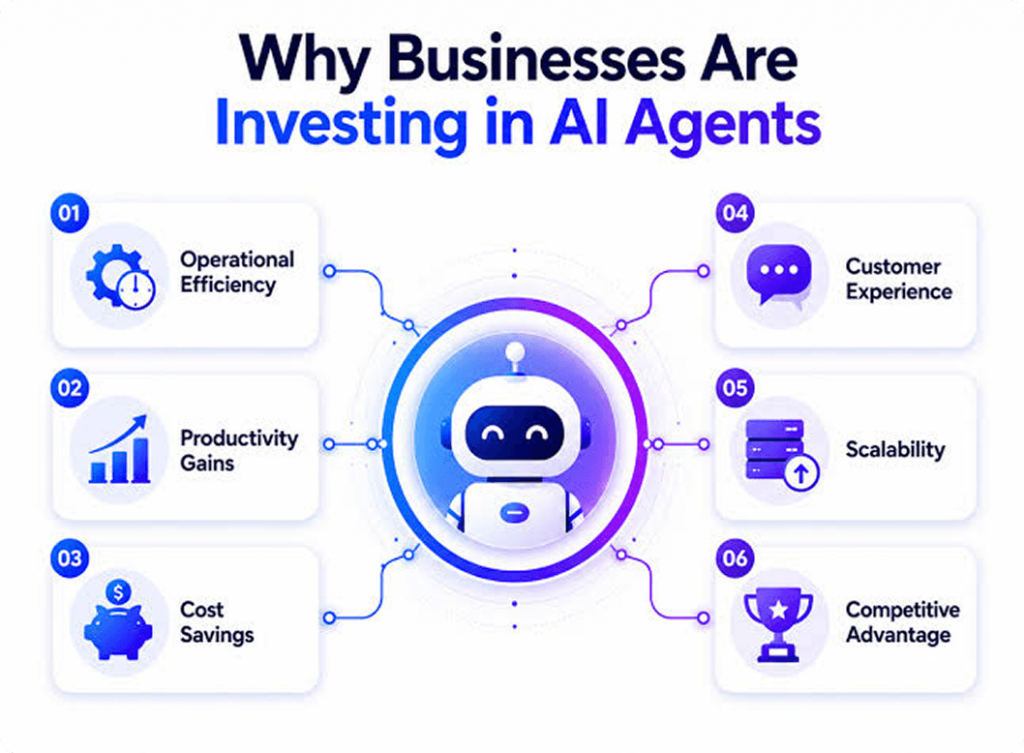
Some of the major benefits include:
Increased Operational Efficiency
Many enterprise methods are repetitive actions between programs including copying data, creating reports, or responding to unusual support requests. AI agents automate these games, allowing groups to spend more time on tactical tasks.
Excellent Customer Support
AI agents can provide 24/7 assistance by answering questions, troubleshooting, ticketing routes, or even fulfilling customer requests without human intervention.
Faster Decision-Making
By aggregating records from more than one system and presenting actionable insights, AI vendors reduce the time employees spend searching for records.
Improve Employee Productivity
Instead of switching between multiple SaaS tools, personnel can engage with an unmarried AI agent that handles many routine tasks on their behalf.
Core Components of an AI Agent
Building a powerful AI agent involves several interconnected components as opposed to relying solely on language versioning.
1. Large Language Model (LLM)
The LLM serves as a logic machine. It translates user requests, knows the context, and sets the subsequent pace.
Popular models include OpenAI, Anthropic, Google, and open source alternatives.
2. Memory
Memory allows AI to retain relevant data in vendor interactions.
Memories can also include:
• User options
• Conversation history
• Previous work results
• Business-unique understanding
• Organizational guidelines
This provides additional customized and regular responses.
3. Instrument Integration
AI vendors are substantially more profitable when connected to outside devices.
Common adjustments include:
• CRM systems
• Project control software program
• Email offers
• Calendar applications
• Databases
• The King of the Clouds
• BusinessIntelligence tools
• Customer assistance systems
Through APIs, the agent can perform actual actions rather than explicitly giving signals.
4. Workflow Engine
Complex business procedures usually require a couple of steps.
For example, an employee request to “prepare this week’s sales summary” might include:
• Retrieve records of income
• Statistics filtering
• Generating charts
• Writing a precise
• Sending a document via email
The workflow engine coordinates those sequential steps.
How SaaS Companies Build AI Agents
Successful AI traders are developed through an established process that balances intelligence, reliability and security.
Identify high-value workflows
The first step is to select tasks that take up a considerable amount of the worker’s time.
Examples include:
• Customer Support Automation
• Sales follow-ups
• HR onboarding
• Expense processing
• Marketing campaign evaluation
• Internal knowledge-statement retrieval
Automating these workflows typically yields measurable productivity gains.
Combine Business Data
The AI agent is the simplest, as beneficial as it could access records.
SaaS organizations integrate their agents with:
• Internal documentation
• Knowledge bases
• Product databases
• CRM records
• Customer interaction records
• Analysis platforms
This guarantees that the agent can generate responses based on accurate, up-to-date information.
Recovery-Augmented Generation (RAG) Implemented
Rather than rely solely on LLM’s education data, many SaaS businesses use Retrieval-Augmented Generation (RAG).
With RAG, the AI retrieves relevant files before generating a response, increasing this:
• Accuracy
• Refreshment
• Transparency domain-specific
Understanding This technique is especially useful for corporate environments where rules and documents are routinely exchanged.
Enable Safe Tool Use
AI vendors often make moves together with updating records or sending emails.
To maintain security, agencies put in effect:
• Certification
• Role-based totally allowed
• API authentication
• Human appreciation for touching moves
• Audit logging
These security measures help prevent unauthorized or accidental activity.
Test Comprehensively
AI vendors need to go through rigorous due diligence before deployment.
Testing includes:
• Edge cases
• Incorrect user inputs
• Security vulnerabilities
• API screw up
• Performance under load
• Prevention of delusions
Continuous evaluation will allow reliability to improve over time.
Common AI agent Use Cases in SaaS
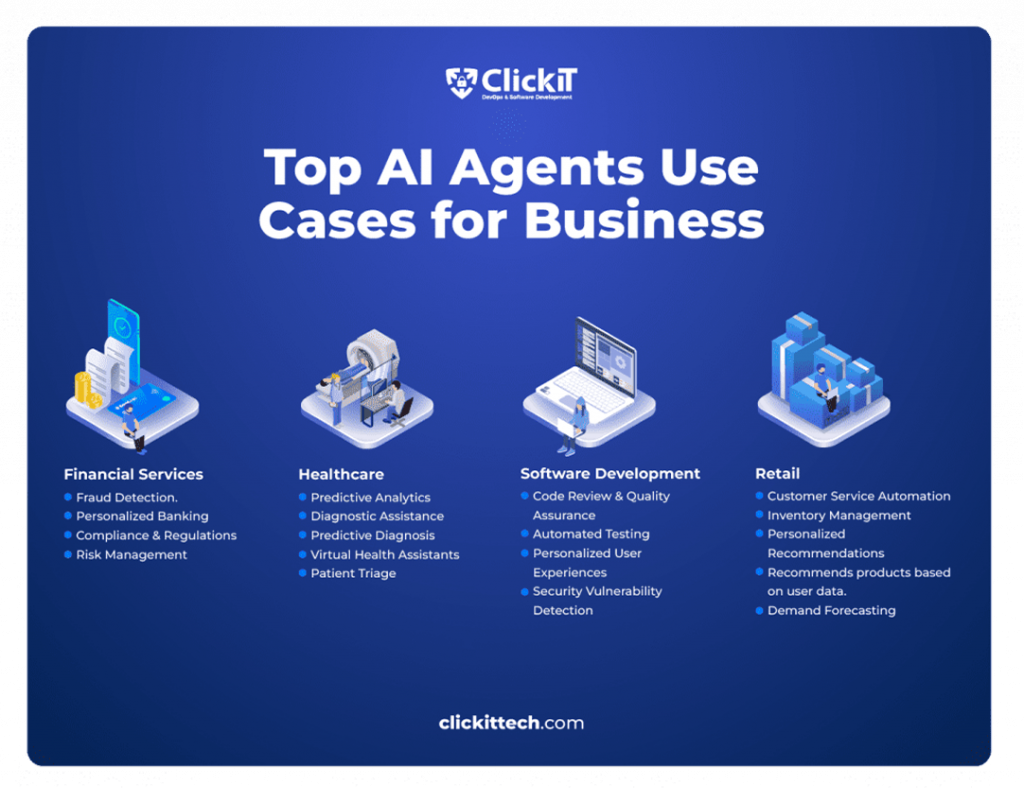
Customer Support
Support salespeople answer questions and answer questions, reset passwords, create tickets, offer solutions, and correct complex issues, even if they are critical.
Sales Assistance
AI salespeople qualify leads, summarize meetings, draft emails, replace CRM systems, and generate sales forecasts.
Marketing
Marketing teams use AI vendors to research campaign performance, generate content material ideas, track competition, and put together reviews.
Human Resources
HR departments automate onboarding, answer worker coverage questions, and assist with agenda interviews and internal documentation.
Software Development
Engineering groups benefit from AI vendors that evaluate code, summarize pull requests, generate documentation, publish deployments, and help with debugging.
Challenges in building AI agents
Despite their advantages, AI vendors give several implementation challenges.
Data Quality
Poor or outdated statistics lead to misleading responses. Maintaining smooth, grounded data sets is essential for reliable performance.
Security and Privacy
AI vendors frequently gain access to touchy consumer enterprise records. Organizations need to implement encryption, have access rights to controls, and have compliance measures to protect information.
Hallucinations
Language fashions may from time to time generate incorrect or fabricated records. The use of RAG, verification layer, and human inspection facilitates reducing these errors.
Scalability
As usage increases, AI infrastructure must manage increased workloads at the same time as maintaining low response instances and high availability.
Expense Management
Driving superior language fashion, and helping infrastructure can emerge in a big way. SaaS companies routinely optimize fees by selecting appropriate models, collecting feedback, and routing easy tasks in short fashion when possible.
Best Practices for Building Productive AI Agents
Organizations that achieve great results typically follow several key practices:
• Start with a nicely described workflow before increasing your qualifications.
• Integrate the best reliable and verified sources of information.
• Design retailers with clear goals and measurable fulfillment metrics.
• Include human review for high impact selection.
• Consistently display overall performance and consumer comments.
• Update to understand prompts, workflows, and sources.
• Maintain special logs for debugging and compliance.
• Prioritize consumer privacy and regulatory compliance from the beginning.
Following these practices enables certain AI vendors to remain reliable, stable, and valuable as business desires evolve.
The Future Of AI Agents in SaaS
AI agents have evolved from convenient assistants to self-reliant collaborators capable of managing increasingly complex workflows. Advances in logic fashions, long-term memory, multiple capabilities, and agent-to-agent communication allow for structures that can coordinate tasks in two programs with minimal supervision.
Future SaaS structures will likely feature AI vendors as the preferred interface instead of an optional add-on. Employees can also interact with the software program in the form of describing desires in natural language, while AI vendors decide on critical steps, gain access to specified systems and complete the task efficiently.
As those technologies mature, groups that invest in beautifully-designed AI retailers may be better positioned to improve productivity, beautify buyer reviews, and scale operations without proportionately increasing manual effort.
Conclusion
AI vendors are transforming how SaaS corporations work by combining language information, logic, memory, and tool integration into smart systems to automate meaningful graphics From customer support to income to improving advertising and marketing software programs They help.
Building hit AI dealers requires more than choosing an effective language version. This includes connecting trusted data resources, integrating enterprise applications, imposing static workflows, and continuously evaluating overall performance. SaaS groups that approach AI agent improvement with a thoughtful approach can unleash huge productivity gains while delivering faster, smarter, and more customized experiences for every employee and customer.