A good house cleaning checklist breaks the work into daily, weekly, and monthly tasks, then goes room by room, so nothing gets missed and no single day feels overwhelming. Instead of staring at a messy home and not knowing where to start, you follow the list, tick things off, and watch the whole place come together.
This guide gives you the complete checklist: what to clean and how often, a room-by-room breakdown, a deep clean list for the jobs people forget, and a few habits that make it all stick. Save or print it, and your cleaning routine basically runs itself.
Before you start: build your cleaning caddy
The fastest way to lose momentum is wandering off to find a cloth or refill a spray bottle. Gather everything first, drop it in a caddy or bucket, and carry it from room to room. A basic kit covers almost every job:
- All-purpose cleaner
- Glass and mirror cleaner
- Bathroom or disinfectant cleaner
- A few microfiber cloths (more than you think you need)
- A scrub brush or old toothbrush for grout and corners
- Rubber gloves
- A vacuum with attachments
- A mop and bucket
- Trash bags
- A duster or extendable duster for high spots
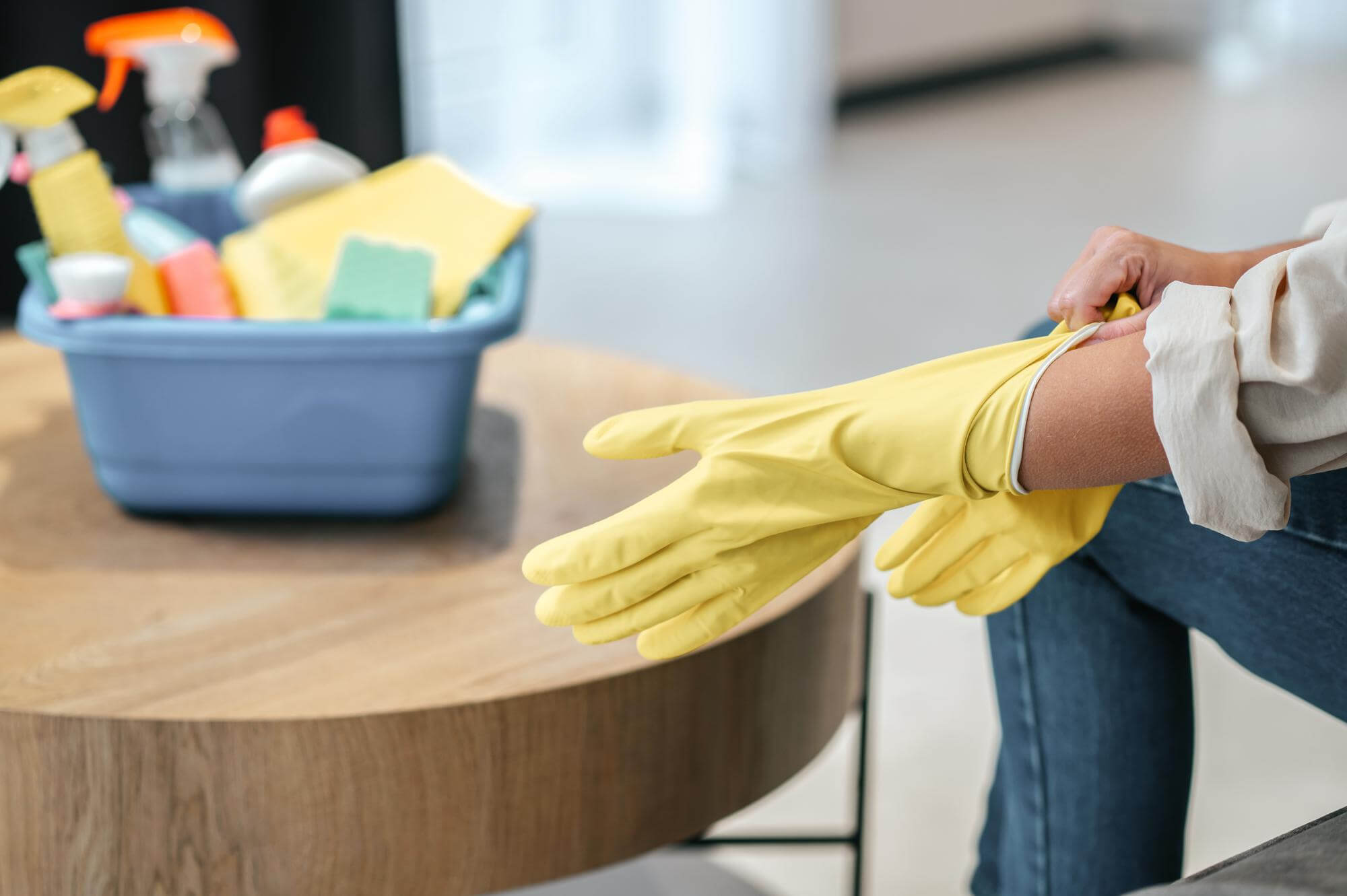
With the caddy packed, you never break your rhythm mid-task, which is half the battle.
How often to clean what (daily, weekly, monthly, seasonal)
The secret to a home that always looks presentable is not cleaning everything every day. It is matching each task to a sensible frequency. Some things need daily attention, most need a weekly pass, and a few only need a monthly or seasonal deep clean.
Use this as the backbone of your schedule:
| Task | Daily | Weekly | Monthly | Seasonal |
| Wipe kitchen counters and sink | ✓ | |||
| Wash dishes / run dishwasher | ✓ | |||
| Make beds and quick tidy | ✓ | |||
| Disinfect high-touch surfaces | ✓ | |||
| Vacuum and mop floors | ✓ | |||
| Clean bathrooms (toilet, shower, sink) | ✓ | |||
| Dust surfaces and electronics | ✓ | |||
| Change bed linens | ✓ | |||
| Wipe down appliances (inside) | ✓ | |||
| Clean inside windows and tracks | ✓ | |||
| Baseboards, vents, and light fixtures | ✓ | |||
| Wash curtains, deep clean carpets | ✓ | |||
| Clean behind and under furniture | ✓ |
For the daily disinfecting line, focus on the surfaces hands touch most. According to the CDC’s guidance on cleaning and disinfecting your home, high-touch spots like light switches, doorknobs, faucets, and countertops should be cleaned regularly, and you clean first, then disinfect only when needed (for example, when someone is unwell).
If you only have ten minutes a day, spend them on a quick reset rather than a deep clean. These small tasks keep the whole house from sliding into chaos:
- Make the beds
- Wipe kitchen counters and the sink
- Load or empty the dishwasher
- Do a quick clutter sweep of each main room
- Wipe down the bathroom sink and toilet seat
- Take out any full bins
A daily reset takes minutes but means your weekly clean starts from “tidy,” not “disaster.”
Room-by-room cleaning checklist
Once the frequency framework is set, work room by room. The golden rule of order: clean top to bottom and dry to wet, so dust and crumbs fall onto floors you clean last, and you are not re-dirtying finished surfaces.
Kitchen
- Clear and wipe all countertops
- Clean the sink and faucet
- Wipe down the stovetop, microwave, and appliance fronts
- Spot-clean cabinet doors and handles
- Empty the bin and wipe the lid
- Sweep and mop the floor
Bathroom
- Scrub the toilet, inside and out
- Clean the shower, tub, and glass
- Wipe the sink, faucet, and counter
- Clean the mirror
- Disinfect high-touch surfaces (handles, switches, flush)
- Sweep and mop the floor
Bedrooms
- Change or straighten bedding
- Dust surfaces, lamps, and headboard
- Clear clutter from nightstands and dressers
- Tidy under the bed
- Vacuum the floor, including edges
Living areas
- Dust surfaces, shelves, and electronics
- Fluff and straighten cushions
- Spot-clean upholstery and remove crumbs
- Wipe remote controls and switches
- Vacuum or mop the floor
Entry and hallways
- Tidy shoes, coats, and bags
- Wipe door handles and light switches
- Shake out or vacuum mats
- Sweep or vacuum the floor
Working in this order, each room takes a predictable amount of time, and the home comes together piece by piece instead of all at once.
The deep clean checklist (monthly and seasonal)

Deep cleaning covers the jobs that do not need weekly attention but make a huge difference when you get to them. Tackle a few each month, or block out a weekend each season:
- Clean inside the oven, fridge, and microwave
- Descale the kettle and coffee machine
- Wash windows, sills, and tracks
- Wipe baseboards, door frames, and skirting
- Dust vents, ceiling fans, and light fixtures
- Scrub grout and re-caulk if needed
- Clean behind and under large furniture and appliances
- Wash curtains, cushion covers, and rugs
- Vacuum mattresses and flip or rotate them
Keeping these on a rolling monthly rotation means you never face a single overwhelming deep clean, because the home stays on top of itself.
Tips to actually stick to your cleaning schedule
A checklist only works if you use it. A few habits make that far easier:
- Habit-stack. Attach a cleaning task to something you already do, like wiping the shower while your conditioner sets.
- Use the two-minute rule. If a task takes under two minutes (hanging a coat, wiping a spill), do it now rather than later.
- Share the load. Assign rooms or tasks to each household member so it is not all on one person.
- Make it visible. A printed or digital checklist you can physically tick off is far more motivating than keeping it all in your head, and ticking boxes is genuinely satisfying.
Tracking your routine on a reusable checklist turns cleaning from a vague, looming chore into a series of small, finishable wins.
Turning your checklist into a system (for people who clean for a living)
If you clean professionally, whether you run a maid service, work solo, or handle Airbnb turnovers, a printable checklist is just the starting point. The challenge is running the same consistent checklist across many homes, clients, and team members, then actually getting paid for the work.
That is where dedicated cleaning business software comes in. It lets you attach a standard checklist to each scheduled job, capture before-and-after photos, and then send the estimate and invoice and take payment once the work is ticked off, so the same quality checklist that keeps your own home tidy becomes the backbone of a repeatable, professional service. For a cleaning business, that consistency is what turns one-off jobs into trusted, recurring clients.
Frequently asked questions
What should be on a house cleaning checklist? A complete checklist covers daily tasks (counters, dishes, beds, high-touch surfaces), weekly tasks (floors, bathrooms, dusting, linens), and monthly or seasonal deep cleaning (appliances, windows, baseboards), broken down room by room so nothing is missed.
What is the correct order to clean a house? Work top to bottom and dry to wet. Dust high surfaces first so debris falls onto the floor, clean and disinfect surfaces next, and save vacuuming and mopping the floors for last. Within the home, finish one room before moving to the next.
How often should you deep clean your house? Most homes benefit from a deep clean every one to three months, with seasonal jobs (carpets, curtains, behind furniture) a few times a year. Spreading deep-clean tasks across the month keeps any single session from becoming overwhelming.
What is a realistic weekly cleaning schedule? Assign one main zone or task to each day rather than doing everything at once: for example, bathrooms one day, floors another, dusting another. Pair that with a daily ten-minute reset, and the house stays consistently clean without long cleaning marathons.
Do I really need to disinfect, or is cleaning enough? For everyday tidiness, cleaning with soap and water removes most dirt and germs. Disinfecting high-touch surfaces is most useful when someone in the home is sick or at higher risk, after which you clean first and then disinfect.
The bottom line
A house cleaning checklist works because it removes the hardest part of cleaning: deciding what to do. Match each task to the right frequency, move through the home top to bottom and room by room, rotate in deep-clean jobs over the month, and lean on a checklist you can tick off to stay consistent. Whether you are keeping your own home spotless or building a professional cleaning routine, the same simple principle holds: a clear list turns a big, vague chore into small, satisfying wins.