Order tracking looks simple from the outside. A customer places an order, receives a tracking number, and checks its status from time to time. In reality, it’s one of the areas where businesses lose the most time and trust. Data comes from different systems, updates arrive late, and customers ask the same questions repeatedly.
AI agents are increasingly used to bridge these gaps. Not by replacing logistics platforms or e-commerce systems, but by connecting them, watching changes, and responding when something matters. For order tracking, that means observing order status across systems, reacting to changes, and deciding when to notify a customer, escalate an issue, or request missing information. The agent doesn’t move packages. It moves information.
This distinction matters because many order tracking problems are not logistical. They’re informational.
Where order tracking usually breaks down
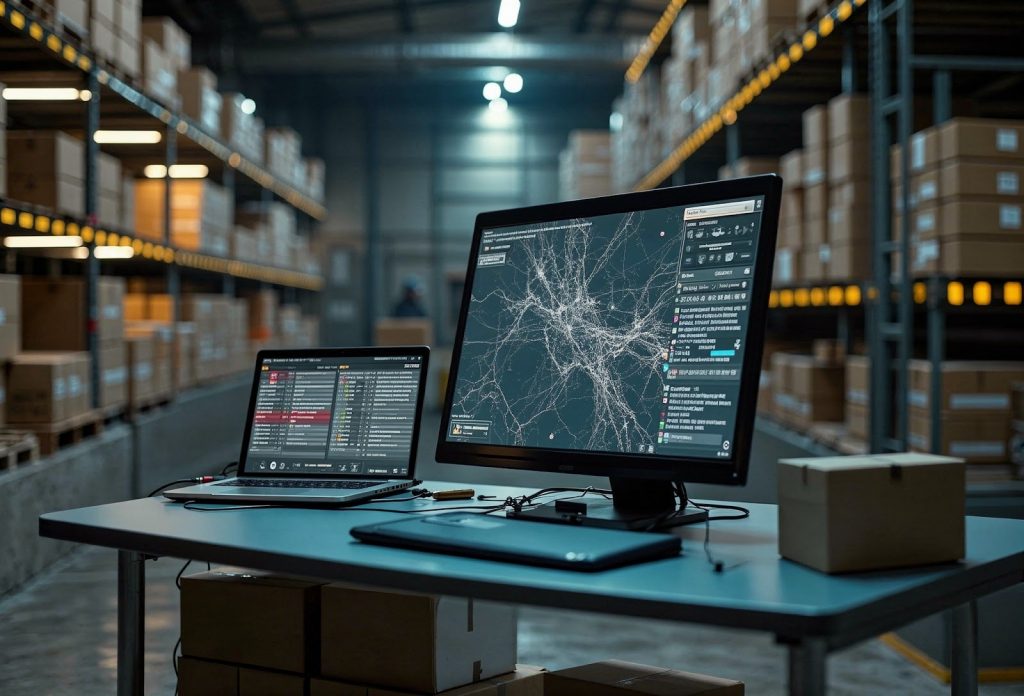
Order tracking often spans multiple tools. An e-commerce platform creates the order. A warehouse system handles fulfillment. A carrier updates delivery status. Customer support sees only a partial view of all this.
As a result, customers ask questions like “Where is my order” or “Why hasn’t it moved for three days”, and support teams have to manually check several systems. At scale, this approach doesn’t hold up.
An order tracking tool built with AI agents focuses on unifying these signals instead of adding another dashboard.
Order tracking with AI agents in practice
When AI agents are used for order tracking, they don’t wait for a customer to ask. They monitor order events as they happen.
For example, the agent watches how an order progresses through its usual stages. When one step takes longer than normal, it can flag the issue internally or update the customer directly. Customers aren’t left guessing. They get information when something changes, not only after it’s already a problem.
Using AI voice agents for order status updates
In some cases, especially for high-volume or non-digital audiences, AI voice agents are added on top of tracking systems. Instead of waiting in a support queue, customers can call and ask about their order.
A voice agent can check the current status, explain delays in plain language, and confirm next steps. If the request goes beyond tracking, the call can be routed to a human with context already attached. This setup is common in logistics-heavy industries and customer bases where phone support still plays an important role.
How AI agents integrate with existing systems
One of the biggest mistakes businesses make is trying to replace their systems. AI agents integrate rather than replace. An agent can connect to the e-commerce platform, the warehouse system, and carrier APIs. It doesn’t need all data in one place. It queries what it needs when it needs it.
This makes setup faster and less risky. Instead of migrating data or changing processes, the agent sits on top of what already exists and fixes the slowest or most repetitive part of the workflow.
Privacy and security in AI-driven order tracking
Any system that works with order data also works with personal data. That’s where concerns usually arise. In practice, AI-driven order tracking is usually set up with more than one safeguard in place. One common approach is to remove sensitive details such as names, addresses, and phone numbers and replace them with internal IDs or masked values. This way, the agent never works with raw personal information.
Another part of the setup is where the models run. Language models can operate in controlled environments without open internet access. In some cases they run on secured cloud infrastructure with restricted connectivity. In others, open-source models are deployed on isolated virtual machines that are not exposed to public networks.

Depending on the use case, lighter models can even run locally, while more powerful GPUs handle complex analysis in closed environments. The key point is that order data doesn’t have to leave controlled systems for AI agents to work effectively. This setup allows agents to operate with narrow internal context or broader data when required, without leaking information. Security here is a design choice, not an afterthought.
Use cases of AI-driven order tracking
AI-based order tracking is already delivering measurable results across retail, logistics, and manufacturing. Large e-commerce retailers use AI agents to reduce inbound “Where is my order?” (WISMO) requests by 40–70%, freeing customer support teams to focus on complex issues. For example, global marketplaces integrate agents that monitor carrier feeds and warehouse events in real time. When delays occur due to weather, customs, or capacity constraints, customers are proactively informed with updated delivery windows rather than generic status messages.
In B2B logistics, AI agents are used to track multi-leg shipments that involve several carriers and handoff points. Instead of relying on manual status checks, agents correlate GPS data, customs clearance updates, and warehouse scans to predict arrival times and flag anomalies early. Some manufacturers already use these agents internally to alert sales and procurement teams before customers even notice a delay, improving trust and contract compliance.
Best solutions and market developments
The most advanced order tracking solutions on the market today share several characteristics. First, they are event-driven rather than status-driven. Instead of polling for updates on a fixed schedule, they react instantly to meaningful changes across systems. Second, they use predictive models trained on historical delivery data to estimate delays, failed delivery attempts, or exceptions before they happen.
Leading platforms integrate conversational AI directly into tracking flows. Customers can interact via chat, email, or voice and receive consistent, context-aware responses. The best solutions also support human-in-the-loop escalation, ensuring that complex cases are handed off with full context rather than starting from scratch. Importantly, modern systems are modular: businesses can start with simple notifications and gradually add prediction, automation, and voice capabilities without rebuilding their stack.
The role of AI agents beyond notifications
As AI agents mature, their role extends beyond informing customers. Some companies already use agents to initiate corrective actions, such as automatically opening carrier claims, requesting missing scans, or triggering reshipments when delivery thresholds are exceeded. In returns-heavy industries, agents can proactively suggest return options when a delivery is delayed, turning a potential complaint into a controlled experience.
Internally, these agents also act as operational observers. They surface systemic issues, such as recurring delays at specific hubs or carriers, helping businesses optimize logistics strategies over time rather than reacting order by order.
Expectations for order tracking by 2026
By 2026, order tracking is expected to shift from a reactive support function to an autonomous, customer-facing service layer. AI agents will not only track orders but coordinate across carriers, warehouses, and customer preferences. Customers will expect personalized updates that reflect urgency, order value, and past behavior, not generic tracking links.
Voice agents will become more common, especially in regions and industries where phone support remains dominant. These agents will handle the majority of routine tracking calls end-to-end, with near-human fluency and contextual understanding. On the enterprise side, businesses will expect agents to operate securely within controlled environments, comply with regional data regulations, and adapt quickly to new carriers or systems.
Ultimately, by 2026, effective order tracking will be defined less by visibility and more by intelligence: anticipating issues, acting before escalation, and making delivery communication feel effortless and trustworthy for both businesses and customers.
Conclusion
Setting up order tracking with AI agents isn’t about adding intelligence for its own sake. It’s about reducing manual work, improving visibility, and responding faster when something changes.
When designed carefully, AI agents turn fragmented tracking data into timely, actionable information. They help businesses track e-commerce order flows at scale, support customers without overload, and do so while respecting privacy and security constraints. That’s what makes AI agents a practical choice for order tracking today, not just an experimental one.